Graceful Garter's Garter Snake Spotlight: Plains Garter Snake
I am thrilled to start doing these species highlights since every garter snake is quite unique. No two species are exactly the same, so this lets me get dive into some of the more popular ones to own as pets, and what better pet to start off with than the Plains Garter Snake!
GARTER SNAKESG3S
Grace Zumbrun
12/8/20254 min read
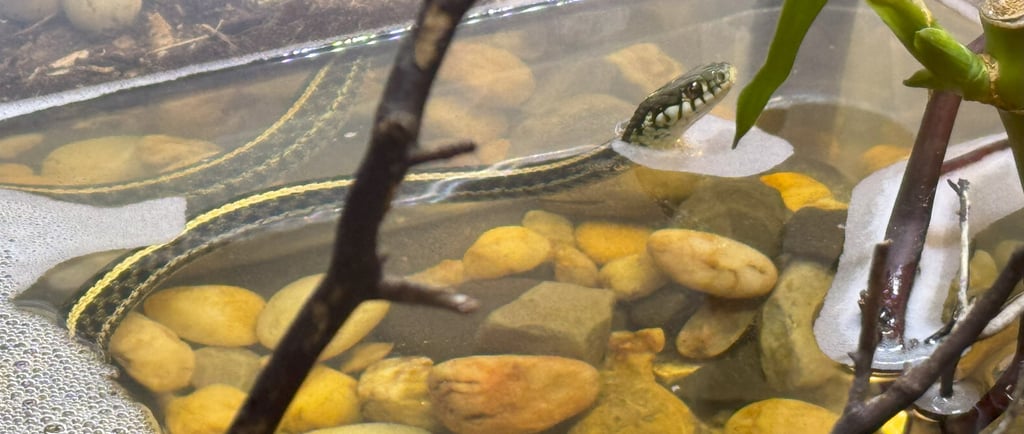
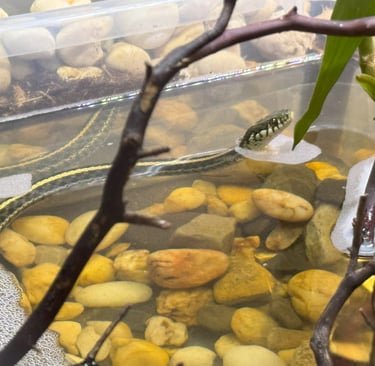
If you are interested in getting into garter snakes, one of the best beginner species is the Plains Garter Snake. This was actually our first species (since we cannot legally own Eastern Garter Snakes). They are known for having a variety of morphs, being easy to handle, having great personalities, and being absolute pigs!
In the first installment of Graceful Garter’s Garter Snake Spotlight, we will be talking about the Plains Garter Snake!
History
The Plains Garter Snake, Thamnophis radix, was first described by Spencer Fulklerton Baird and Charles Frédéric Giard in 1853. Its naming history is quite the roller coaster! Check out the timeline below to learn about it!
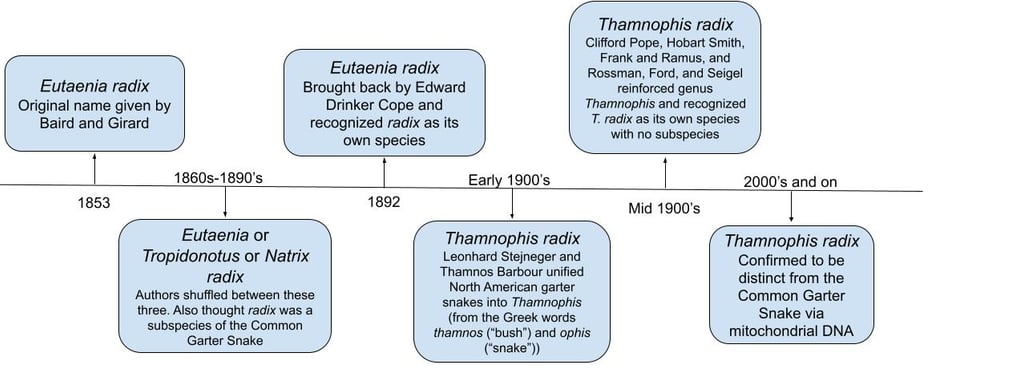

A fun discovery during the 2000’s and on phase was that there is some genetic structure between the plains and western populations of Thamnophis radix, but not enough to make subspecies. But science is always changing and evolving, so who knows, maybe we will have Plains Garter Snake subspecies in the future!
Description and Range
Now that we have talked about the history, let’s look at their description! They are typically found in central North America, as far north as Alberta, Canada and as far south as Texas. You can find them in a variety of habitats including prairies, wetlands, suburban areas, and the edges of agricultural fields.


Adult Plains Garter Snakes are about 1.5-3 feet in length with some individuals surpassing 3.5 feet. They can be identified by:
Bright orange/yellow stripe that goes along their spine
White/yellowish side stripes on either side
Checkered black spots between the top and side stripes with a green/brownish background
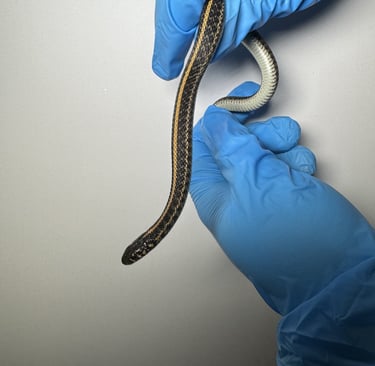
Black bars on their upper lip, which helps to distinguish the Plains Garter Snake from the Common Garter Snake.


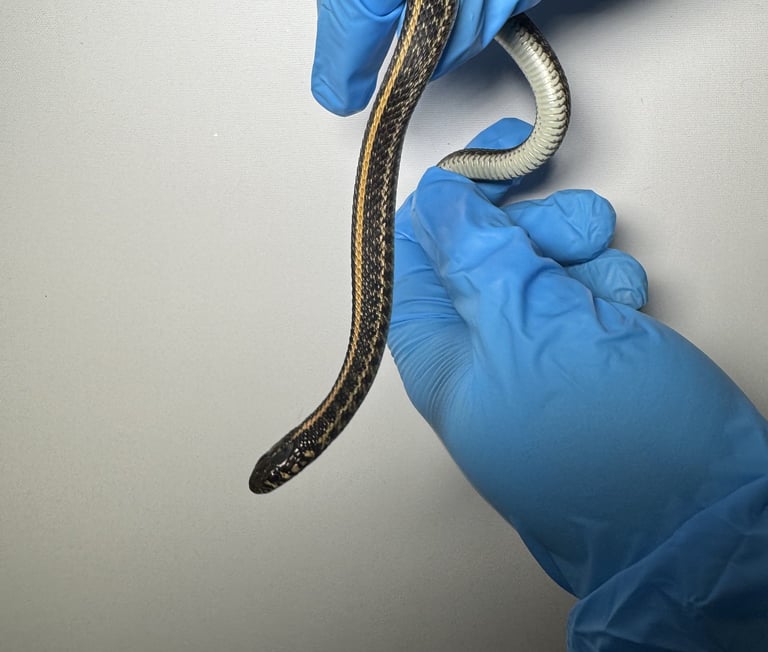
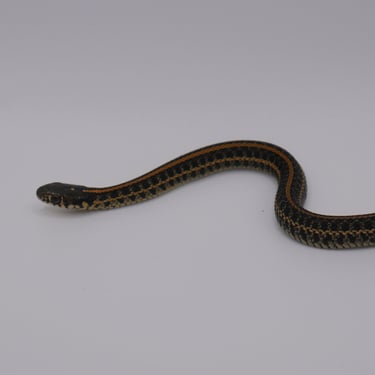
Common Garter Snake (specifically Valley Garter Snake)
Plains Garter Snake
Note the lack of black bars on the upper lip on the leftmost snake!
Behavior
Plains Garter Snakes are diurnal, like all garter snakes, making them a common sight during the day. They are incredibly cold-hardy compared to other snakes that share the same regions. Like other Thamnophis, these scaly guys are social and even will hibernate communally, even with other snake species! Juveniles tend to be more nervous, but they typically calm down as they get older, which means you are more likely to get musked on by a baby than an adult. Because they would rather stink you up with their musk, the chance of one of them biting you is relatively small (I’ve only been bitten one time by Stump, but I can’t blame her, my hand smelled like food!).
Diet
Speaking of food, the Plains Garter Snake eats a variety of different prey! What they eat depends on their environment. You can find them snacking on earthworms, amphibians, fish, small rodents, and soft-bodied invertebrates. Like all garter snakes, they possess a Duvernoy’s gland that secretes a mild venom through their rear teeth to help subdue slippery prey and aid digestion.
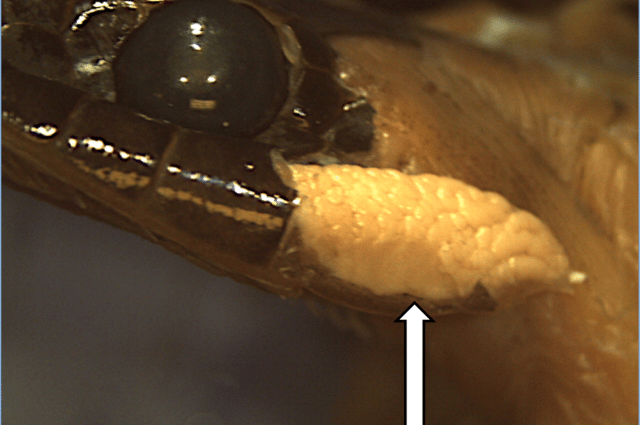
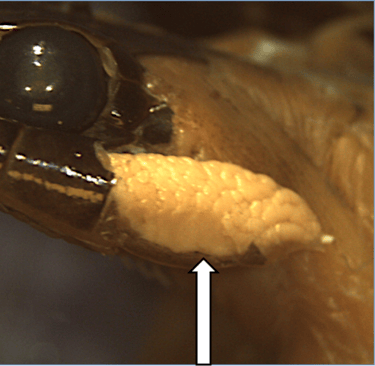
DG_arrow.png by unknown author or anonymous contributor from Wikimedia Commons, licensed under CC BY-SA 4.0. No changes were made.

Reproduction
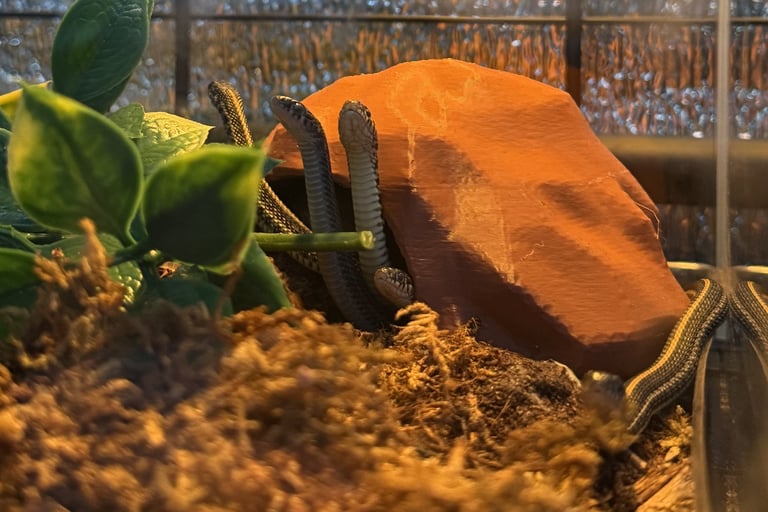
Like all garter snakes, radix give birth to live young (viviparous) in litters ranging from 10 to over 40. They mate in the spring and sometimes in the fall and have a gestation period of about 2.5 to 3 months. The babies, or neonates, are about 6-9 inches in length. Once they are born, they are ready to go find a meal and make a mark on the world!
Conservation Status
The Plains Garter Snake is one of the most stable and widespread garter snake species. Although its overall conservation status is Least Concern, some states list it as threatened, including:
Illinois
Missouri
Colorado
They are threatened by destruction of wetland habitats, chemicals coming from farms like pesticides and herbicides, cars on roads, and the fragmentation of their habitats.
Morphs
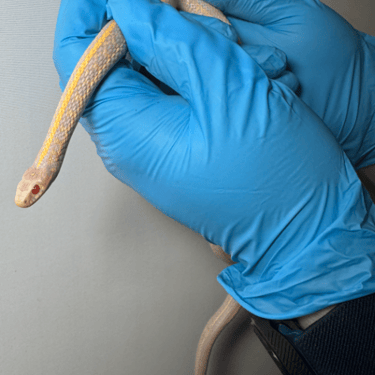
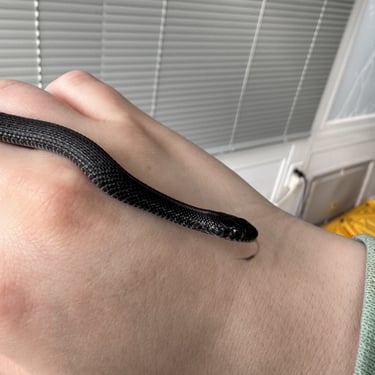
Due to their hardiness and wonderful traits, you can commonly find them in the reptile trade in a variety of colors! Here is a list of known morphs:
Wild type
Albino
Black and White Axanthic
Blue Axanthic
Melanistic
Pearl
Erythristic